Ahead of the Storm

Students in your class receive approval for the accommodations for all online instruction. They do not even have to have medical reasons. Why is this not extended to employees? The few class meetings, which will probably end by October anyway, will just be collective explanation of instructions.

You plan to assign films for one class. Legitimate, award-winning documentary series that will serve as textbooks, with supplementary articles that can be downloaded from databases. This also serves to cut the costs of textbooks for the students. The library holds only DVDs for some of these videos. Students no longer have DVD players in their computers. Even if they could check them out, they cannot watch them.

You find the films on YouTube. You link to those and hold your breath that the copyright holders don’t remove them before the end of the semester. Nevertheless, you anticipate complaints about technological problems that you cannot fix because if you could, you would probably be in another line of work by now (except for your love of research).

You would at least know that you had other options for work and be less exhausted. One of the things that exhausts you is the effort you exert in denying or convincing yourself against the possibility of your school shutting down and you, at your age and rank, wholly unassociated with elite universities and therefore (in the minds of academics) not really very smart, thrust back onto the job market. You are not able to retire yet, and may never be. They did suspend all retirement contributions this year, in addition to your pay cut. The pay cut was determined on your salary before the raise that you earned and would take effect this year.

Pay cuts capped at a salary level below the CFOs, just as a reminder.

To the president of the college’s credit, she offered to take a much larger pay cut. She has her moments. The Board of Trustees refused. They said it would make the college look bad, as if it were in worse financial trouble than they pretend it is.

They also insisted that she rent a house closer to campus, to show she’s “part of the community.”

Campus activists agitate. They tend to be on the left; but the right has their own methods. The election looms. The last one brought out both sides, and terrible ugliness from the right. Dumbassery rears its head perennially. The administration “urges” professors to record classes. You sense potential for disaster from all sides. Already you’ve been attacked by people you have defended, whom you support, even as you were attacked by their opponents. The same for colleagues. Teaching about civil rights in this environment will not allow for nuance.

The Dean holds a Zoom meetings for faculty in his purview to address concerns about the fall. You reluctantly sign in on the day he meets with the liberal arts. You write in your question about the above concerns. You see his toothy smile freeze as he reads your question. You see him skip it. Forty minutes later, you write it again. You see his toothy smile freeze again. He asks for verbal questions. He asks again. You can almost hear him say “Bueller.” He adjourns the meeting. You have never seen someone running a meeting shut it off so fast.

“We let the freshmen know that racism WILL NOT BE TOLERATED!” write well-meaning colleagues who just discovered that racism still exists. In the North. Today. Again. “The freshmen have a unit on racism in their COR 100 class,” they assure you. As if that has not been the case for the past eight years that COR 100 has been implemented. As if that matters in a 3 hours per day, five days a week, outdoors, social distanced, class. As if one day of those 3 hours, outdoors, social distance classes will address all of the nuances of racism and conflict that they will encounter.

As if that will begin to address the shitstorm that heads our way.

Yes, one shitstorm at a time. Perhaps the first one will obliterate the need to address the second, if we are all back at home by October.

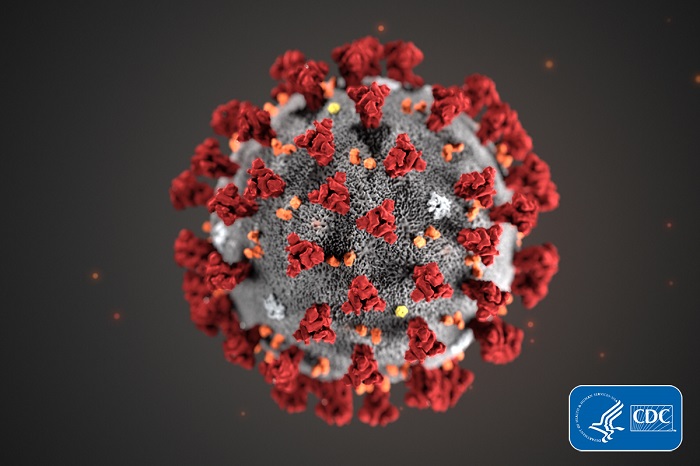
Melatonin Dream

At night, no matter how exhausted you are, when you turn out the light, your brain pops awake, sits on your chest, and says “let’s chat.” You picture it as some acid green, cross between a gremlin and a very fluffy cat with a Cheshire grin. So you take melatonin to sleep. Perhaps you could meditate or do something healthy, more useful in that sense, but the melatonin knocks you out for a good ten hours with little or no interruption and none of the jittery legs of antihistamine.

Melatonin takes you down into dreams. The dreams dissolve within minutes of waking, but they leave you with a sense of having been vivid and real. Two weeks ago, you woke yourself just as your husband, the Eminent Historian, also woke you screaming. All you remember was that the nightmare that awoke you was a nightmare within your dream, not the dream itself. The nightmare was two levels deep in your sleep. This week, your husband, the Eminent Historian, woke you twice from restlessly loud dreams. You have no memory of either except the sense that your mind told you turbulent stories in the night.

Last night’s dream you remember, closer to the surface, closer to the morning, filled with imagery both familiar and yet, new. Basements, instead of attics, storing not just toys this time but also old items. The desire to clean, dust, purge of insects. Snow, not just white edges of unconstructed mindscapes. Parents in turmoil, but no longer at you, and you in a position to help them, who do not want it. A mountain instead of an old neighborhood, but the outlines of the neighborhood showing. A marker for a beacon for some forgotten meeting of political subterfuge. A house that shifts floor plans. You living with your parents now, but able to move away, wanting to use those funds to help them move instead. Your mother not really the mother you have, but still her, looking more like a Big Eyes painting or perhaps like the Corn Poppy, but with eyes that are all black shadow, and skin sallow to yellow.

Dreams have always been your deeper self trying to tell you something about yourself, stirring up muck in the dark part of your psyche. You think of the dark water that Nick Adams avoids in your college American Literature class. Did Phil Collins’ plaintive voice accompanied by Eric Clapton’s crying guitar, along with his solo oeuvre to that point, which you and your husband, the Eminent Historian, listened to yesterday evening, dislodge something? Perhaps the Sherlock Holmes — original series with Jeremy Brett — and its unintended 1980s aesthetic joined the excavation. Something in you tore and released this dream; and something in the dream tells you something has shifted. You don’t know what.

Last week you a creature bigger and nastier than the gremlins emerged from your depths. You are too afraid to tell anyone about it, even your therapist. This monster told you that, small though your sins may be, they are unforgivable. You cannot be forgiven nor redeemed nor absolved. No matter how far back you go, no matter the pain put on you by other people, your fibre made you respond in the ways that you did. You were not just doomed by the people around you. You were doomed by your own being of narcissism, self-pity, and weakness. You were simply born into an environment that cultivated it. You are evil, a low-grade brand of whitegirl evil, but evil nonetheless. You cannot be absolved.

This dream was not like that. It wasn’t counter to it, but it was something more complicated in its symbols and places and you.

You wish you had someone who understood this language. Who could help you fumble through this maze of you.

Obstacles to Obstacles to Obstacles

You wake up vowing to get things done today, to convert your in-person class to an online class. Within an hour the monumental task of dealing not only with that basic shift, which alone takes monumental amounts of time, but also the limitations of resources now available to your students to do any type of research outside of the books for class that you assign has overwhelmed you with despair.

History courses require research papers or research projects of some sort. I’m sure other departments do, as well, and I have qualms about the demands that we put on our freshmen since they were designed for students arriving from privileged high schools back in the 1980s, which is another story for another time. Still, whatever the department or scope of the project, in the liberal arts, humanities, and social sciences, everyone should expect students to do some sort of exploration of the subject outside of the classroom. That’s where the library comes in.

Most librarians will tell you that they have to fight battles about the function of a library. While they understand that the library building offers many services, including a gathering place for group study and, in the case of our school, a centralized location for tutoring-type services, they and the faculty also know that the core mission of a library involves access to information. Access to information costs money and, in the case of books, requires space, which also costs money.

Guess what happens to the library when it wants money for access to information and space that is not dedicated to anything social? The director actually has to fight with other people on the steering committee for books. Sometimes those other people come from STEM fields or business, where books are not the driving force of research or intellectual production, so they don’t understand the reason that the liberal arts, humanities, and social sciences require such archaic and non-environmentally sustainable things as “novels” (all objects made of bound pages seem to be called “novels,” these days, regardless of content). More often those other people come from administration; and at our liberal arts school, no one in a major decision-making administrative position has a liberal arts degree. Indeed, they do not even have a liberal arts-adjacent degree. It’s all management or professional.

Really, if you asked them to connect the dots of their talking points about “liberal arts” its “value” and what those professors do in the classroom and with their research, not a damn one would be able to draw a line.

But, you digress.

This here is a situation, even in ordinary times, in which the librarians themselves fight for the resources for research. One of those resource is Interlibrary Loan, but locally there is a state-wide consortium of colleges, Connect New York, that acts in much the same way, but speedier and at a lower cost for each individual institution. It is grand! With ILL, you may not receive a book for a long time, sometimes so long you have almost forgotten the reason you called it. With CNY, you get the book within two days. If it is an e-book, you get it immediately on your computer screen. This means that you have access not only to more libraries, but libraries with bigger, better collections. You have joked that the fancier college down the road must love subsidizing your own college’s nineteenth-century U.S. history collection.

The pandemic has forced budget cuts at many of these other colleges, however, and frivolous things like libraries get the hit. Yes, you know libraries are expensive and everyone has to suffer, but you have always wondered, ever since you yourself were a freshman, at the reason the academic life of a college goes so early to the chopping block rather than losing or unnecessary sports teams, collegiate equivalents of party-planning committees, and such.

Heck, if the CFO took the same proportional pay cut as everyone else beneath him, then some of the other financial problems might be alleviated. He knows that, but he made sure that the pay cuts stopped at a salary far below his. His, by the way, is the highest at the college.

Back to the libraries: Now, some of the best schools in the consortium are out. Students cannot physically enter the library on your own campus. They must request books be brought to them. That would be fine if the collections met their needs. They do not — at least not for the classes you are teaching this semester. If everyone gets sent home, students have no access to books. All papers must be written via databases.

This reinforces elitism in education. Students at the schools with the better libraries have better access. Just like professors at schools with lighter teaching loads and better research libraries don’t have to limit their research and writing to holidays, essentially purchase their own libraries, and raise funds for work-related travel. (They do have to put up with shitty comments about not truly being at the top of their field, despite winning the top award in their field, simply because they are not at the “right” sort of school, as happened to a friend of mine — but that’s another story.)

All of which is a long and grievance-riddled way to say that you now have yet another wrinkle. What level of research can you reasonably expect from students when their access to research material is so limited? What can you draw upon to supplement the books they must buy?

This is not just a matter of just switching to online, nor is it a matter of accommodating online by lecturing via Zoom (with 30+ students in a class). This is a matter of having fewer resources with which to do any of this, followed by a list of “suggestions” about making all activities “apply to real world situations,” not taxing attentions for longer than ten-minutes, and all sort of other grade-school-level “pedagogies” that do nothing to address the specific issues of teaching history, which is both skill and content along with convincing them that it is something worthwhile to know in spite of not training them for a job. All of this while not knowing if these “suggestions” are actually rubrics on which you will be evaluated but knowing damn well that all of this is for — what — actually, you don’t really know what this is for.

Every morning, the pile of obstacles grows with every step and every administrative e-mail, with every realization that the lessons that you took so much time to plan last year can no longer be done, with every realization that every existing assignment must be rethought and recreated and maybe even just scrapped and replaced. There is no reward here. Just an ongoing series of obstacles to obstacles to obstacles with no point except survival.

Really, you can’t blame anyone, in spite of your anger. Not anyone close, not the college administration nor the students nor their parents who, in their love, ill-prepared their children to face the world (much like your own, to be honest). You can blame the nation’s administration, the person in the White House that an Eminent Women’s Historian among your friends has named “Il Douche’,” and all his enablers. You’ve hit a point of numb, battle-fatigue with them, and to think about them means thinking about November and thinking about November makes you even sicker because you know history, and the next chapter is not going to go well, you fear.

What is the Point?

A new wrinkle appeared in your inbox last night. “If you are receiving this message, students in your class have indicated that they….will take the all online option.” The ellipses describes the conditions that allow them to do so. Conditions that both fortunately in the grand scheme of the life and unfortunately for the immediate future do not apply to either you nor your husband, the Eminent Historian.

No explanation of how many students nor which class, because you are teaching two different courses that, in the schedule of alternation according to course number, put you on campus every week. No explanation of what will happen to them if they are in an elective, and therefore can only take this section. Just, this is happening, can you accommodate?

That this question comes so late, one week before freshmen arrive for their extended orientation, and three before all students arrive, tells anyone curious that this has been a last minute glitch. In going through all of the contingencies for reopening, the planning failed to take into account the students and their health and family concerns. About a month ago, they ended up polling students on this matter. The results seem to be in.

You don’t want to get angry with anyone here because, again, this is such an unusual situation. Still, at a school that always puts the students first, in a “business” that treats students like the customer who is always right, this is rather surprising. Especially since the students desire to have some normal sort of school year has allegedly been allegedly driving the return to campus (actually, we all know that the students’ room and board dollars have driven these decisions, but students always come first).

You would also like to the reason that at least some online sections for the core classes that have multiple sections weren’t considered at some point., even if that point is today.

Right now you have each class in a classroom, one half at a time, one class meeting time out of every forth. Out of what would normally be approximately 26 meetings during the semester, you will now have maybe 6; and that is only if everyone is not sent home before it is all over. Already, you are in a situation of “what is the point?” Now, if part of those students can’t even attend those six meetings…? Well, if there is a critical mass, then you could just treat those meetings as office hours or a study session and put the whole course online. In fact, you may just do that anyway. In fact, that might be the best idea. They would be lagnaippe if we don’t have do go all online, and no great loss if we do.

“What is the point?” There isn’t one. So treat it that way. Take matters into your own hands and do it your own way. Also, remind yourself that you don’t care about promotion because there is no reward with it, just as there is no reward here. Only survival.

So It Begins, Again

August begins the Janus pivot in the world of education, turning away from the much-earned summer that ends the school year and toward the coming new academic year. That sense of loss fades as anticipation for something new and fresh rises, cool weather, autumn leaves, holidays, pumpkin spice, another break all beckon on the horizon.

Not this year. This year, you wonder how quickly you can pass through the phases of grief to get through to the acceptance that will take the form of being prepared for what this fall will and could hold. This year, you feel sick with dread.

Denial: If you don’t begin to prepare, then the fall semester won’t begin. Right? The humor of this joke has not lasted because you want it to be true far too much. You can’t deny. You know that just getting prepared, doing anything, will alleviate some of the anxiety. Besides, your powers of denial are overly occupied elsewhere. Taxed like peasants under King John, begging for a Robin Hood. (That was an attempt at humor. Your humor has been taxed just as badly these days.)

Anger: This one scares you because anger has been bred in you. The grooves in the paths in your brain run deep toward anger. So much has pushed you into obsessive spirals of fury that left you depressed and exhausted. You have posts marked private here that you had to bleed from yourself like some medieval humor. Yet, still, weeks would pass where your energy was spent holding it at bay.

Who are what are you angry at? So many things and people. Yet, you can’t lash out at them.

Now, this, this preparation for a fall that you can see careening toward disaster, and you have to have a plan for falling off a cliff, smashing into a cliff, an explosion, drowning, and any other type of thing. You have to accommodate 90 different learning styles, 90 different emotional and psychological reaction to stress, 3 different types of learning environments, and all lessons geared toward “real world skills.”

You teach world civilizations. To freshmen. Who are not history majors. Who have not read an adult-level history book in their lives. Literacy is essentially the main “real world skill” you will be teaching. Not read-and-write literacy, but a deeper level of literacy.

The classroom, with social distancing, can only accommodate half of the enrolled students at a time. So the plan to have them in class one week and online the next, which you figured might work, means that you will have to meet with one half of the class on one day and the other half of the class on the other day. In other words, you will have them in class one out of every four class meetings. The other three will be online. You wonder, “why bother with the classroom at all?” So you will essentially have one collective office hour with them to de-brief from the previous week’s online work and explain the next week’s. You aren’t teaching history. You are explaining assignments and grading them. You are a t.a. All of the unpleasant parts and none of the joyful parts of the job.

The other class, which alternates in syncopation to the world civilizations class, is on the civil rights movement, subtitled African-American history since 1865. You so very much want to teach this class with these students in a classroom where you all can talk about the current events and work through the difficulties.

Yet, this class also has local issues connected to it that infuriate and terrify you. Not about Black Lives Matter, which you support and understand. More local to the school, the total ignorance of the administration about what the faculty does, and the fury felt by activist students and whose activism also suffers from weaknesses that faculty usually notice from student work in general, like the failure to do their research, and then excuses for their failures, and then blaming professors for their failures.

The students’ demands included classes in race and the history of BIPOC (a new term you learned and are happy to use but have also learned that failure to use gets you branded a racist because you have learned too that there are no gray areas, which is also a weakness of schoolwork). Yet, those very classes are offered every semester in all of the liberal arts and social sciences and humanities departments that are supposed to be so central to the mission of the school and yet so marginalized by the administration and marketing department.

When you pointed this out in a meeting, you were told to be quiet by two people, one a staff member and one a student. You were told you were being defensive and fragile. You were being neither. You were correcting a factual inaccuracy that went so far as to say that no classes were offered called “African American History” and said by a student enrolled in the very “African American History since 1865” course that you will be teaching.

So, you struggle with a little hostility.

You struggle with fear, too, after having watched someone you care about become the sacrificial lamb of a group of “woke” but complicit hypocrites. You watch apologies, efforts to do right, make good, improve, even just do, fall under attack in a world in which nuance and subtlty cannot exist. Discussion does not exist. Hell, even the term ally does not mean, “common goal.” There is only “with us 100%” or “against us 100%.” Your own person, white and female is suspect and therefore a target. Your every action wrong: help and you are a “white savior,” don’t and you are part of the problem or fragile. You end up paralyzed. And furious, because just feeling this way makes you feel like all of the work that you have done your whole adult life to be better than you were brought up to be is all for nothing. You aren’t any better, but you can’t go back, either. You are just here, and frozen, and a target.

All you really want to do with this class is help these white kids who fill it, who are so earnest, skip many of the steps and setbacks that you went through. That’s your mission. You are the white envelope. As a target, fearful and hostile and paralyzed, you are worthless.

Depression: The best parts of teaching gone. Worthless. A cloud made of the effort to hold yourself together between you and your writing. The anniversaries of your father’s illness and death and the beginning of the year of gloom. Clinging to sobriety out of a race with yourself to rack up more months than anything else because that fast road to “don’t give a fuck” seems so nice. An election that will only bring disappointment and fascist authoritarianism. What are you for? Nothing matters.

Bargaining: What do you bargain with? Or for? What will acceptance look like? Just getting through the day? No, more than that. It will be more like late spring, when you could be grateful, when you knew what that word meant. It has become abstract again. A thing you should feel, or a thing that feels mournful.

Now, this is loss. Still loss, but for what? Perhaps loss returns because of the big denial that we would all be back to “normal” by now, that this upheaval would have settled over the summer. It has not. So, you return to loss. You aren’t even sure exactly of what.

No Comment

No, you cannot comment on the matter.

If you comment on the matter your statement will be dissected as if it were the Zapruder tape. Every curve, every serif, of every letter of every word’s archaic and principle meaning in every edition of the OED will serve as proof of your racism, elitism, unearned privilege, and fragility. This will testify to your infinite, empirical, and ineffable failings as a moral being.

Self-appointed justice, blind to its own brands of privilege, will rally the Twitter — call it what you will. What you will call it will also come under the microscope of fury because, whatever you call it, it will deny that it is being used as a weapon by people who have themselves railed against its use as a weapon.

You cannot sit and discuss, explain, clarify in an exchange the finer points of meaning or misinterpretations and miscommunications. All sides, then, would have to admit missteps. No one makes missteps. People fail utterly as moral human beings, and those people are other people, who must apologize.

That apology is also, in every curve, every serif, of every letter of every word’s archaic and principle meaning in every edition of the OED proof of the other person’s racist, elitist, unearned privileged, fragile, moral turpitude.

The only acceptable apology is one that apologizes for mistakes that were made by other people who will be punished swiftly and mercilessly, as proof of the Righteousness of the apologetic who would never suffer such punishment for their role, of which they had none, in spite of their apology for the mistakes that were made or their role in the systemic problems that they promise to fix just as soon as they get the report from the committee they will form to study the need for the committee.

Only learn from other people’s mistakes, if mistakes were made. Because no one makes mistakes, or missteps, or misunderstandings, or does any of the things about which “we can do better.” No one has to learn from their own actions, or own any actions to learn from. Only other people.

So, no, you won’t make a comment because there is no room for comment. There is only a side to pick because, if you don’t, you will be thrust onto the other.

The Eye of the Shitstorm

Where to begin in what can only be a pause in the middle?

You mother has the coronavirus. She sits in quarantine in an ICU, on an empty ward in a civilian hospital in San Diego. She can have not visitors. Even the doctors must cover themselves from head to toe to examine her.

This news, in the scheme of the previous several days, actually relieves you and your brothers. They — whoever “they” are, which has proved to be part of the problem — lost her for a few days. In searching for her from afar, visions of films in which a person disappears with authorities forcing family members through a reluctant and hostilely incompetent bureaucracy only to find their loved one on a slab in a morgue run through your head. The first season of Treme, Sissy Spacek and Jack Lemmon in Missing. Your brother and you contemplate going on a Thelma and Louise mission out to California to find her, which, given that you thought she might be on a Marine base at the time, may have led to a visit to Guantanamo Bay. So, yes, relief has become the odd feeling for the eye of this shitstorm.

How did they — whoever “they are — lose her? Well, that goes back to her circumstances. She had taken a cruise a few weeks ago, before news about the coronavirus broke. While she was floating about Hawaii, the news about this aggressive illness in China broke, then the news about the illness appearing in the U.S. broke, many of those cases in Washington state and California, then the news about the illness causing a localized epidemic on a cruise liner broke.

These bits of information floated about your consciousness until you listened to the New York Times podcast The Daily on which the host interviewed the Times‘ science and health reporter Donald G. MacNeil. He spoke your language: history, the 1918 pandemic. When he said, that the mortality rate matches that of the 1918 influenza and “in 1918, not everybody died, but everybody knew somebody who died,” all of the bits in your head snapped into place.The coronavirus travels across the Pacific. Your mom is in the Pacific. It spreads on cruises. She’s on a cruise. It’s in Washington and California. She’s going through California back home. Your niece, frolicking about Disneyland on her Make A Wish trip, will return to her home in — yes — Washington state. You don’t care about yourself getting sick, but you damn well do care about the oldest and the youngest persons in your family possibly dying from the illness.

You held that bit of information on the periphery of your consciousness so you could function because what else are you going to do. So, you were not that that surprised to wake up to the news that her ship had been quarantined.

No, that isn’t exactly accurate. The OED must have a word for the emotion of “holy shit!” followed by, “of course.”

The Grand Princess news anyone can find online, and if someone reads this after some other news cycle has overwhelmed the outbreak on the cruise — indeed as is happening while these words appear on the screen right now — the Grand Princess was the ship that took a voyage from San Francisco to Mexico and back, then out to Hawaii and back in February. A handful of passengers sailed on both legs, as did crew. Passengers on the first leg disembarked, then tested positive for the coronavirus, one dying not long after. All of which happed while the ship took the second voyage. Meanwhile, passengers on that second leg began to show symptoms, forcing the vessel into quarantine while authorities — the “they,” whoever “they” are — figured out what to do next. The passengers and crew risked falling victim to a localized epidemic if they stayed on board, but where else had the capabilities of taking them without spreading the virus further? Meanwhile, the ship floated about San Francisco until a port with fewer tourist could be found in Oakland (we will leave aside Oakland’s racial and socioeconomic make-up relative to San Francisco’s for the time being).

Your mom now found herself confined to a tiny cabin with only a bunk and a desk chair, in weather too cold for the balcony (but at least with a view), and herded back into her room when she slipped out at night to stretch her legs in the halls. Neither a California resident nor obviously ill, she fell toward the bottom of the list for disembarkation.

Then, she went silent. No text. No phone calls. No e-mails. No Facebook comments.

Sobering Up

Where to begin when you don’t really know where everything began and you aren’t even sure which pronoun to use, I or you? In medias res and see what happens. After all, at some point, you do just have to dive in if you want to do something.

Last year I got sober. I can even say “I” as a result, although I probably begin with “I” far too often.

First, however, I got drunk. Not so that anyone noticed. Only they know what they thought, but no one has been so bold as to say, “girl, thank goodness! We were worried.” Even my husband had not noticed. Perhaps they just chalked it all up to my usual kidding-on-the-square about being a Drunk, or saw it as a response to my father’s death. Whatever. That is not really the point.

The point is that, by August, as we closed in on the anniversary of the Awful Week when I last saw Dad in the ICU and all that flowed from that, Prosecco had become my goddess. After 5:00 pm — Wine O’clock — I maintained a state of comfortably numb. Before 5, I spend the day consumed with anticipation of that moment when I could sink into that marvelous state of Don’t Give a Fuck. Wine O’clock seemed to get earlier and earlier. After all, isn’t 4:55 almost 5? And 4:45 is close enough? 4:30 is practically 4:45, which is nearly 4:55, which is almost 5? And it is summer, too.

Then, the day-drinking. Not like on vacation. If my husband wasn’t home, I would get a bottle of Strongbow maybe mixed with a touch of cassis. If he was, and I spied an open bottle of wine in the refrigerator, I might take a slug. As the semester drew near, I joked with myself that I could get an opaque water bottle and no one would know that I drank at work. Then, I started to see myself split in two, the soberly old superego self taking bets with the Drunk about when I would no longer be joking and actually do that. (The odds were on mid-October.) Then, I knew that I wasn’t joking.

For months after my dad had died, I looked out my window into the snow or muck, and wondered why I was still alive. Then, sometime in the spring, I began to wonder why anyone would want to be alive. This wasn’t suicidal, which would have felt much more energetic or focused. This wasn’t even suicidal ideation. This was just a bleak malaise. Only once did I have a flashing thought, “you could do something about it, you know.” I quashed that gremlin fast. Smash! My husband, my mother, my brothers, their families were not going to go through that. Then, I got drunk. Drown that gremlin’s body to make sure it was gone.

In the end, that was the closest that I came to a dramatic revelation, and it wasn’t even a revelation. I didn’t have any crisis or epiphany or intervention. The thought that I drank too much, if only for caloric reasons, had harried me for several years. I had stopped several times before. “Cut back,” “Dryuary,” “Drytember,” went on a diet, call it what you will. I could manage it. This time, however, I knew that I had gone too far. Honestly, a day or two was too much because I felt so miserable. The deep but insightful misery of grief had become boring, mundane, banal, and the fizzy bubbles of Prosecco made everything not matter. At the same time, I was just too weary to keep waking up feeling not-my-best-self. Not hung over, really, just an overall, unceasing feeling of muck in my blood and weight in the back of my head, just above the spine.

So, one Sunday morning, I woke up and said, “no more.” Well, maybe not quite so final. I had spend the previous sleepless night looking up information on alcohol recovery, starting with liver damage and detox and so forth. “Your liver can repair itself in 30 days?” I read on some Dr. Google site. “Let’s focus on that.” Although forever seemed too long, I did look up meetings. You know what kind.

That week I saw my therapist. We talked yet again about the situation. She doesn’t usually tell me what to do, but she said, “here’s what I think. You do have a problem, and you should stop drinking forever, and you should go to AA.” I think I just needed to hear that outside of my head because, when she said that, a wave of relief swept over me in the same way that one does when someone says something you have been thinking and you sigh, “oh, thank god! I’m not crazy after all!”

That following weekend, I went to a meeting; but that is another story.

Memory 7

Can you keep this up or will it consume you?

One of the last memories, from the ICU. You sit at his side, holding his hand when you can. The nurse comes in. He likes the nurses, and you love them for that. You will always love them for that. They ask a series of questions to check his mental capabilities. “What is your name?” “Where are you?” “How old are you?”

They don’t ask who the president is. That actually might have been funny. He would probably have squinched up his face and said something that involved “muthafucker” or his patented “goddamnsonofabitch.” He is — was — a lifelong Republican, but doesn’t recognize his party anymore. He almost registered Democrat to vote for Bernie Sanders.

Also, people wonder where you got your mouth.

The nurse comes in. She asks, “who is this?” She indicates you, on the far side of his bed. He swivels his head on his neck, like an owl.

“My daughter,” he replies, slowly, kindly, sweetly. Swiveling his head back around to her, as if in a dream, as if through water or gel or a slightly drunken haze.

“And what is her name?” she asks, the real test. You yourself wonder if he will pass.

His head swivels again, carefully enunciating each syllable of your full name, first, middle, and last, smiling the whole way. No joke on anyone, no test to pass. The fullness of knowing, the “of course” implied, the entirety of your life together, all the way back to your birth contained somehow in every note.