“Seconds, Not Decades”

This moment. This moment. This moment.: This strategy puts you in mind of this scene from Season 2 of Umbrella Academy. Throughout both season, Five had leapt through time over decades, finding and causing much mayhem. Here, himself on death’s doorstep, he remembers a suggestion — from his own older-but-really-younger-by-two-weeks self, if I remember correctly — to try leaping in “seconds, not decades.”

This slow, tiny, hopping is the way you visualize yourself, now, moving through your day, resolving your conundrum. You can manage being in this moment, doing this thing, not thinking about the future; but life demands that you think, look, forward to the next thing and the thing after that and the thing next week, causing you panic. So, how do you get from now to then without collapsing? Like Five: “by seconds, not decades.” Think of yourself as leaping from this task to that; or, rather, non-think of yourself leaping from this task to that.

In a moment of synchronicity, which wasn’t so magical because the whole world pretty much is finding themselves in the state of despair, you came across a New York Times article on resiliency. They seem to be doing a series of articles on the topic. This one — oh, lord, it’s the FB algorithm spiders, isn’t it? — this one showed up in your feed — the fuckers! (What would Carl Jung do with social media?) The author said roughly the same thing, just less whimsically. She got herself and her children through a traumatic experience by not thinking beyond the present. (Of course, you now cannot find the article, so who knows how old it was.) Her experience became a means of growing stronger and enabling her to manage this present crisis and she argued for seeing crises as means of developing coping mechanisms.

Well, yes and that conclusion also seems like the simplistic, upbeat conclusion for a popular publication. The article also ended with a list of traits that mark people as being more resilient. Anyone reading this can already guess that they included the exact same checklist for modern-day, well-adjusted happiness that could be dropped into any self-help article. You hate those lists because you seldom can check anything off on them and, as a result, feel like you are a failure. They feel like yet more things that you have to do and you are just tired of chasing that trophy even as some inner magnet seems to pull you toward them.

Still, you were with her up to that list.

You also wonder — and your shrink raised this question — if your own coping mechanisms have more been to escape than to develop that resiliency. As a child, you read to escape, not to learn things or develop a critical eye or anything deeply intellectual. You wanted a safe way out of the screaming conflict of your home. You turned to literature and then to history because they seemed routes out of the miserable here and now.

Here and now always catches up to you.

Your mind has blocked off the future as a reality after a certain point, or turns it into a dystopian hellscape that paralyzes you, because you cannot deal with a potentially world-ending level of uncertainty. You cannot deal because you feel powerless and your reaction to feeling powerless has always been to find an escape route, to make a contingent plan, and then a contingent plan for the contingent plan, and there seems no way to make a contingent plan these days.

So you freak out.

So you concentrate on this moment and try to make leaps by seconds, not decades.

Time to make a leap.

The Conundrum

The day progresses. You write a little. Go for a walk that becomes a run. Go to the grocery store. Write a little more. Somewhere in there you feel yourself gathering calm and concentration. You realize the key catalyst involved the absence of a computer. (Is that a catalyst? A catalyst would work the other way. The computer catalyzes the anxiety.)

Without the computer, outside, elsewhere, your brain unclenches, stops that tense shivering frenzy. Somewhere in the baked goods section you find yourself able to see a cake, appreciated the cake, not even want to eat the cake, just enjoy the general cakeness of the cake and the pretty icing colors and the momentary enjoyment of cake. How silly to enjoy the existence of cake! How wonderful to feel silly! How alive to feel silly!

So, you try again. “Under Pressure” on the sound system. You open yourself to the groove, knowing that it might open you to emotions that make you cry, but you open yourself to that. You feel the beat, “coming down on you…lovelovelovelove….” How silly to be jamming in the middle of the grocery story next to the Instapots, waiting for the Eminent Historian to return with Teriyaki sauce! How alive to feel silly!

This moment. This moment. This moment.

Earlier that morning you had patrolled the yard. The sun not entirely above the treeline left much of the back, by the thicket, in shadow. No socks, tenny shoes, spooky-story podcast still in your mind, dark undergrowth, made good companions for a mood that asked “why are you alive?” You stepped on a soft spot, a divot of deeper grass, and felt your death.

What does that mean? You aren’t sure exactly, but those words came to you, or the sense of those words. A sense of a grave and being on its edge. A sense of dark, damp earthiness. You weren’t sure how you felt about it, but you weren’t quite ready for it, yet. You just don’t want to feel this way. That much you are sure you know.

This moment. This moment. This other silly moment that made you feel this side of that death.

You again wonder what hope is. When you were younger, you rejected the concept of hope as a fool’s errand, a thing that people clung to in the absence of action, in helplessness. You felt that you had to reject it to force yourself to act. “Fuck hope!” you told yourself, “hope is dreaming. Do something.” So, you did. Hope remained dreaming in your cosmological dictionary.

You listen to a podcast, With Friends Like These, hosted by Ana Marie Cox, a recovering alcoholic herself. She talks about hope as an action. You began listening to her in the past two or three years — since the last election. (Time moves strangely for you, the older you get.) For some reason, hope seemed necessary since then. Maybe not “hope,” but something like it. Something that keeps you on this side of the grave. Something that keeps you moving in something resembling a forward motion (and maybe the fatal flaw is the idea of “forward motion”). The idea of hope as an action fit with your “fuck hope” ideology.

She interviewed author Eva Hagberg this week who told of a friend who, on her deathbed, still had hope. “How?” Hagberg wanted to know. “Hope is the now,” the dying friend said. Well, that’s a twist.

Then, again, maybe not.

This moment. This moment. This silly moment. This keeps you on this side of the grave. This is also what kept you sober for a year and change. This is what kept you wanting to be on this side of the grave and wanting to be sober for a year and change (ok, wanting for most of that year, the last few months have had their challenges). This action of inaction, of concentration, of calm, like in meditation or the right kind of yoga in which you have to pay attention to unclench. You have to pay attention to now.

This summer of fury, frustration, worry, more fury, all of the worst parts of your work, all of the things you feel that you have earned that now feel snatched or devalued, the binaries and meanness (even from people preaching – no, demanding! — empathy), felt like a room getting smaller and smaller and smaller. Why were you alive?

You still ask that. Why are you still alive? The hope, the thing that keeps you on this side of the grave is the moment.

But, here is the conundrum: you cannot think about the future at all or the moment collapses. The future can be as soon as finishing this post, as soon as this afternoon. The future can be next week, or next month. You really have a hard time thinking that anything after the election exists. Next year does not exist in any form in your head, and when the Eminent Historian in his optimism says something like, “maybe we can go to Greece,” or “maybe we can finally do those research trips,” you find that thought far more depressing than what will more likely happen and what will more likely happen makes you ask why you would still be alive. (Except not to be alive would hurt him beyond reason, and you also do want to be with him and never hurt him that way.)

Yet, you HAVE to think about some future. You have to grade. You have to finish this paper for this Zoom conference on Thursday and Friday. You have to grade. You have to prepare for class. You have to grade. You have to write this review. You have to grade. You have to write this peer review. You have to grade. You have to answer these e-mails. You have to grade. You have to grade. You have to grade and grade and grade because online teaching is all about the grading and very little about helping students understand the subject. All of these put you in front of the computer, all of these make you feel dread, and all of these force you think of the future. The future heightens the sense of futility and pointlessness of all of it, which steals the moment and any concept of hope.

That. That is the conundrum. You don’t know why you feel this way, what about you, with no children, no dependents, no nothing to add to this, drives you into deeper despair than anyone else you know. You don’t know how not to be this way because every time you try not to be this way and think you have succeeded, you find the conundrum and end up right back in despair and feeling a failure as a human being. Yet, here you are. Looking for the moment.

There is no hope…

“There is no hope and the future sucks!” you joke. Actually, you kid on the square because humor keeps you from losing your damn mind. Like in the wake of your father’s death, you rather wish you could lose your damn mind. The idea of it seems relieving but for the inconvenience and, worse, distress that your mindless damnation would cause the Eminent Historian and others.

You are also rather shocked at how humor places such a cushion around your mind that even you cannot tell how much of it is lost and how much of it is real. What is kidding and what is square?

After you write that, you have to leave to meet a colleague for socially-distanced coffee. On the way, a sense of grief wells up. You want to cry. Why do these moments always come when you are driving, and you so seldom drive anymore? Because they are the moments when you actually have solitude, and you so seldom have real solitude anymore.

When you have the solitude, the resistance lifts. The need to appear not so bad, the “kidding” to reassure that the “square” isn’t so sharp recedes. Unfortunately, driving must occupy your attention. Then, you arrive at the coffee shop.

This incident is relevant in that the conversation over socially-distanced coffee further reveals the invisibility and devaluing of faculty whose work is completely relevant to current events. Once again you are caught in the gray area between the 1 and the 0 of a binary.

A staff member, recently-hired and recently-appointed to be Co-Head of Diversity Whatever, told faculty that their research and teaching on matters about race don’t matter, that they need to take bias-training seminars and educate themselves on race,. For thirty minutes. In a faculty meeting. Where she was not on the agenda. Then, she sent out various “woke” articles from popular, unvetted websites that half of the faculty could have written as undergraduates. When the faculty of color, and the faculty who do teach and research about race, objected, they were told, in so many words, to be quiet.

When those same faculty tried to apply for newly-appropriated funds to further their teaching and research, they were told that the newly-appropriated funds (let’s not forget that this is in a year when you are all taking a pay cut, receiving no contributions to retirement, and have been told that, crisis or not, your health benefits are on the chopping block) will only go to such 101 types of initiative as starting a group to read White Fragility or the work of Ibram X. Kendi (who, by the way, does not cite scholars — some of whom work at your college — on whose research he bases his conclusions).

In other words, all diversity initiatives and money go toward the newly-woke, and you can’t say anything critical because everyone is so WOKE and you are supposed to pat them on the head and give them cookies for being WOKE. Meanwhile, everyone who has something to contribute are all ignored, so much so that when the Office of Communications puts out a statement on something so simple as Juneteenth or the death of John Lewis, they don’t think “hey, we have a history department, maybe someone down there teaches U.S. history and might know a little something about this.” Instead, they go to one of the Heads of the Diversity Whatever. Neither of whom are historians nor know anything accurate about either. This, after being told to shut up when pointing out that the students who protested lack of classes on race or African American history were factually wrong.

By the way, their leader admittedly knows those classes exist and has actively avoided taking them. Their leader said this to your colleague as she sat in your colleague’s office complaining about the lack of the very same classes that your colleague teaches. “I teach that class,” you colleague, who is not white, told the student. “Sign up for it.” The student did not.

The binary here for faculty means falling into either the college-sanctioned Diversity Whatever, regardless of expertise in the subject, or the Nice White Object of the Diversity Whatever. You are either one of about three people that the Administration likes because you will tell them what they want to hear, or you are part of a newly-woke white mass waiting to receive, willing to simultaneously self-flagellate and self-congratulate. You can’t be a scholar with expertise on which anyone could draw.

But that was more than you wanted to write about that. That was a venting. Going home you felt less alone, but more demoralized. The philosopher Head of Diversity Whatever you have worked with. She knows better than this. She knows the faculty and what they do. Yet, she goes along with this assumption that all the faculty are of a type and doesn’t see how those who don’t fit that type are more and more infuriated that their lives’ work gets shunted aside and ignored except for those students who actually do take your classes.

The administration sees you as skilled labor whom they suffer because of the skill, yet they know nothing about nor see the added value of that skill to the institution. The vast majority of students see faculty as an impediment to their futures, unless they are in your majors, then they learn how little the majors are valued unless they involve business or the professional school. The activist students don’t even bother to find out if the classes exist, and then they reverse engineer a reason that faculty are a problem to cover their lack of research. And you can’t help but wonder if the students might respect faculty more as experts in our field if the administration showed us more respect as experts in our field.

You start to wonder what the point of remaining sober might be. You start to wonder what the point of education might be if all you do is grade freshman papers and fight with Canvas all week. You start to wonder what the point of gaining expertise in a field might be if the people you work for don’t recognize it, if the white guy (in spite of his own efforts to help you) gets the credit, if doing anything less than radical puts a target on your back, if voting will not matter because Trump will not leave office, if fascism and authoritarianism and anti-intellectualism have become virtues that have allowed a faction to gain enough power to hold on, if the last best hope of the future lay in the survival of a frail, 87-year old, cancer-ridden, brilliant woman.

And, now she’s gone.

There is no hope. The future is doomed.

De-intensify

Your dad always said the anticipation was worse than the experience. Actually, he quoted Shakespeare, “Cowards die many times before their deaths; The valiant never taste of death but once.” You understood what he meant, but never could change yourself.

In this case, the beginning of the semester proved much less stressful than its potential. The build-up of planning, changes in plans, adjustment of plans, confusing schedules, anxiety about woker-than-thou students all smoothed as the small size of each class meeting, of each grading batch, became a reduced reality, not a quadrupled nightmare. As for the woker-than-thou students, once you began talking, you realized just how balls-to-the-wall, grown-up, been-there-done-that, forgot-more-than-they-have-yet-learned you actually are. Goddamn, that felt strong! Two weeks down.

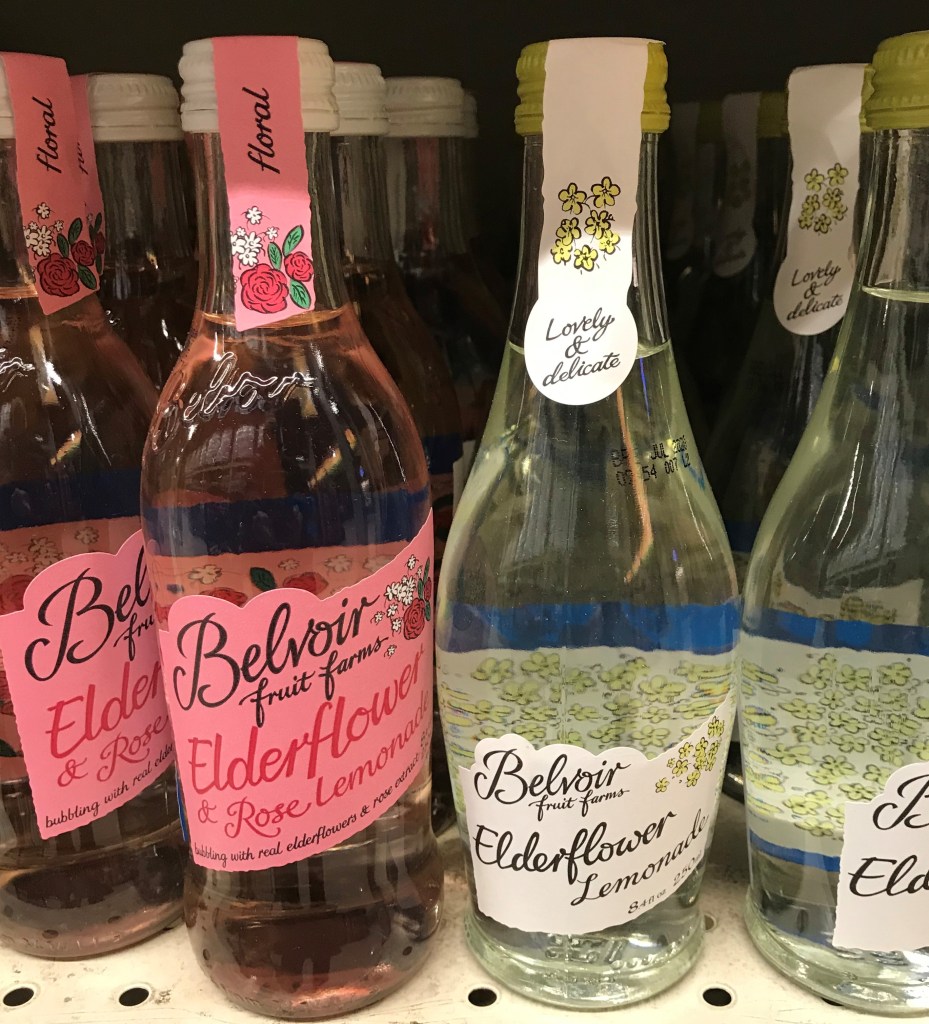
On the first day back, too, you returned home to the Eminent Historian and his visiting daughter commemorating your year of sobriety. They had a small cake, a card, Elderflower and Rose Lemonade soft drinks, and a year chip on order. As the young folks say, you felt “seen.”

Still, everyday you feel yourself on a rollercoaster of emotion, especially of the last month. Partly you feel a cellular-level memory of Dad’s death, a pocket of pure grief, guilt, and regret. You feel, too, your mother slipping. You can’t go see her. You fear that you will turn on the television and see your brother among the militia, and you feel somehow responsible for that. You feel like a Puritan: inherently depraved, and you feel hopelessly sad. The changing seasons feels less a relief, as it always has, and more a sense of time passing too quickly. You feel as if you are trying to hold water.

You try to ride the depression, as if you would a roller coaster. You used to say “float in the feeling” to yourself, but riding it feels more appropriate these days. Riding is forward, right? Yet, you can’t really see much to hope for. You can’t really see a future. Next month seems like a possibility, next year a fantasy, beyond that? An impossibility. Or perhaps this year has been so horrible that you don’t want to think about a future for fear that it could be worse.

Now that the intensity of anticipating the semester has relented, you at least find your ability to find moments of appreciation here and there. The children next door putting out their Halloween decorations and creating imaginary friends from the blow up creatures, or the little girl having a picnic amid the witch and skeleton parts scattered about the Styrofoam headstones. The old-timey feeling of listening to a webcast of a play reading while spinning. The genuine sweetness of the Eminent Historian and his daughter, together and individually. A walk on the canal and forgetting everything but that for a minute. A puzzle.

The future makes you miserable. So does the past. Before, you have rejected hope as a false and painful god. Yet, you still had it. Now, you wonder. What is hope? A thing for younger people, you thing. How do you act without it when you aren’t ready to die?

You suppose you are finding out. For one, you aren’t getting drunk!

Once More Into the Breach

Actual image of your mood.

Today begins your teaching for the fall. You sit here in anticipation, a bit like the upward climb on the first big hill of a roller coaster at a dubious travelling carnival. The other side might not have passed inspection and the beams might be rotten.

Already, freshman have innundated you with e-mails, having misinterpreted your general instruction to indicate their class and meeting time when they contact you as a command to send you a message right now indicating their class and meeting time. At least you know how they think and which ones anxiously plan to do well.

Somewhere along the way, in juggling three different schedules — the T half of classes, the Thursday half of classes, the classes that meet on even numbered weeks, and the classes that meet on odd numbered weeks — you mixed up even and odd numbered in a document. Two students alerted you to that, so you had to do a quick fix. By “quick” you mean find the document. Find the mistake. Fix it in its program. Scan for other mistakes. Save as its program. Save as a pdf. Remove the original file from Canvas. Replace with new file. Move new file to correct place in sequence of files for the week. By “quick” you mean about 15 minutes for each class.

Nothing is “quick” online. Everything requires multiple steps.

Mo’ technology, mo’ problems was the first draft of the lyric, you are certain.

You remember the days when all of your preparation for class went into learning more material, devising new ways to present it. You remember that you enjoyed the use of powerpoint as a visual supplement, but most of the work went toward the material. Now, the majority of your time goes towards demands for ever more detailed powerpoints, and more and more of this Canvas crap.

“Easily accessible,” you have actually learned, is really the new, “file it away in a cabinet and forget about it.”

So, now you must get dressed — easily the most creative thing you will have done in a week (aside from knitting a Phrygian cap while watching old movies in the evenings) — go to campus, loaded down with books, find the cleaning supplies that you forgot to pick up last week when they did a mass distribution (again, your mistake), hope that everyone got to the right class at the right time, and get them all oriented.

You just learned that you can’t bring coffee into the classroom.

Take bets on when you snap like a dried-out twig. When, why, and will it come before we all end up all online?

You put your own money on the week of September 21: first assignments and therefore first rounds of grading due, online conference and therefore Zoom and preparations for conference due, book review due the next week, along with next round of grading due.

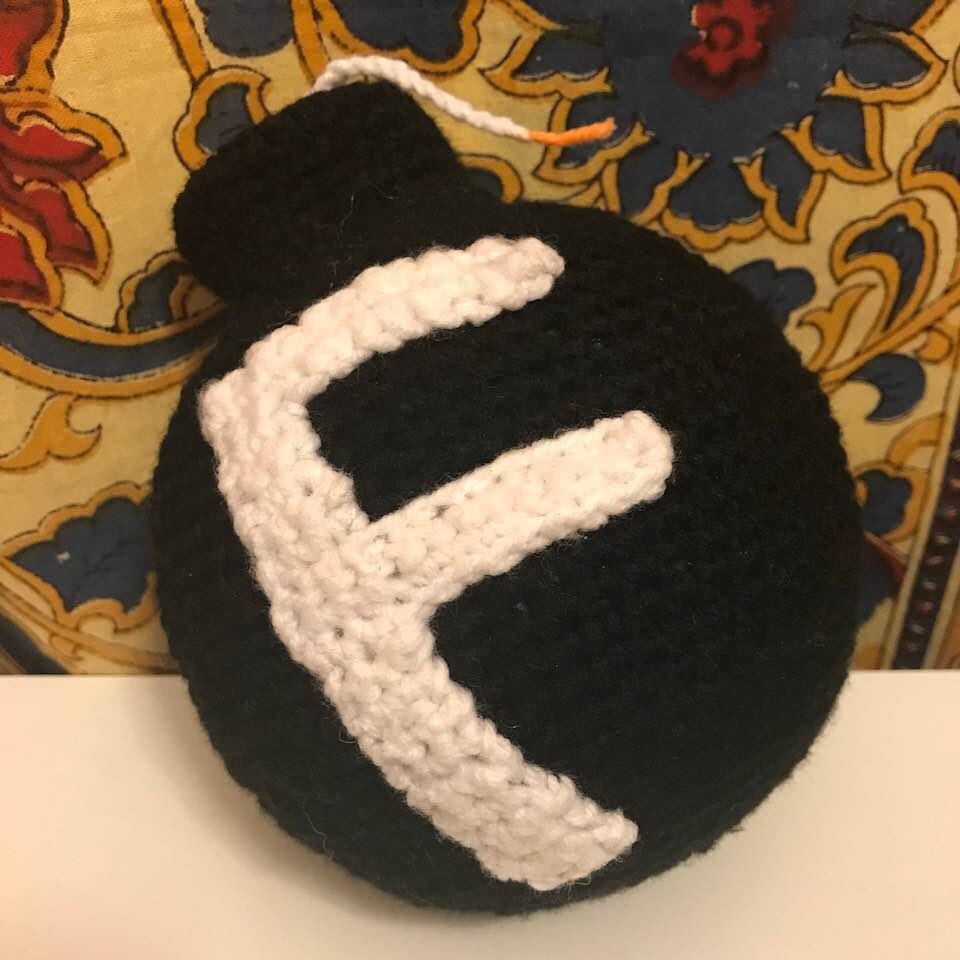
You are a ticking bomb of unfocused resentment, waiting to go off.

One Year

A year ago today you stopped drinking. Back then, a year seemed a long time to go. Back then, you did not know what a year you would be facing. In retrospect, it wasn’t as bad as losing your father; and, in retrospect, it was probably best that you quit when you did. Otherwise, you would most certainly have the problems that you anticipated when you stopped.

You definitely would have started day drinking. At work. That still sounds like a good idea that is really not a good idea.

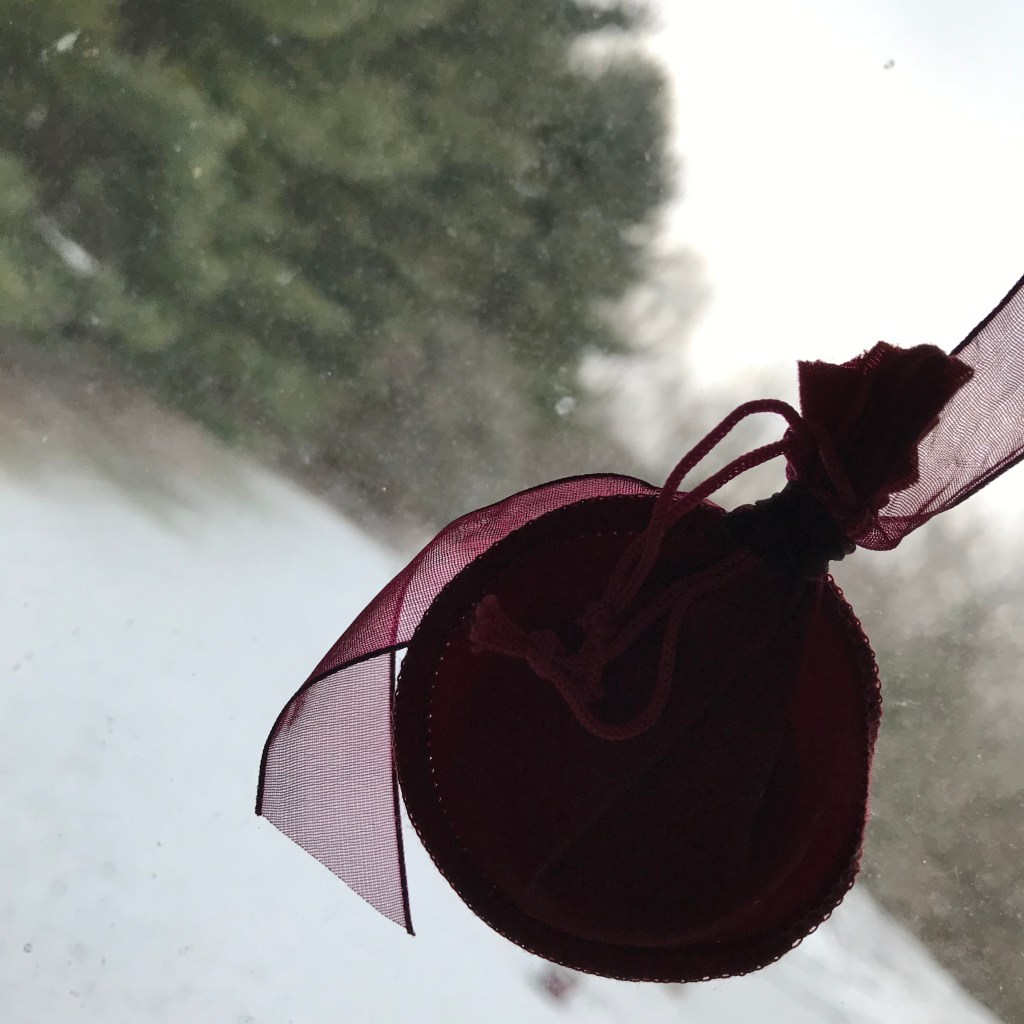
In all honesty, the chips kept you going at first, partly. The sense of not being alone and of being among other women who were imperfect also kept you going, but the chips were like gold stars and you have always liked gold stars. Chips are little, Mardi Gras doubloon type coins marking your time. You kept them in a tiny bag for earrings or some such thing and wore it on a string around your neck when you went on trips to remind you not to give in when you knew that you would be tempted. It now hangs on the neck of a flask that was a gift when you received tenure. You used to joke that everyone would know when you got tenure because you would show up for class wearing jeans and a t-shirt and drinking out of a flask. You also started to fold an origami crane for every month, stringing them together. Today will be twelve.

Then the pandemic ended the meetings; and to be honest there, too, you had kinda slacked off of meetings because the previous month’s topics always focused on God and Faith. That’s just not your worldview and the effort to translate to your own was not working. Some of the other twelve steps did not seem to be quite right for you either. The sense of connection wasn’t working, and you just kept feeling like maybe you had gotten what you needed from this method and should look for another method. You still hold on to what you can from that one, however, because something is better than nothing.

The best part, at the beginning, last fall, came with finding whatever was on the other side of the Drunk. You had to replace the habit of drinking with something else, first. You discovered Ginger Beer, which you first had to discover was not actually beer, but similar to ginger ale or root beer. In other words, you discovered a world of soft drinks. You also discovered that soft drinks in England and Scotland are different from in the U.S., but that’s another story that involves fizzy lemonade. You got back to knitting and crochet — anything to keep your hands busy. “What are you knitting,” people would ask (regardless of the specific needlework). “A sober person,” you answered.

Then, you discovered whimsy. Roller skates. With hot pink wheels. Acting in a play (that the pandemic cancelled and now you have nightmares of going on stage and not knowing your lines). Dressing up for class. You discovered the joyful, uncorked, drunk feeling without being drunk. You actually enjoyed teaching the shitty, first semester freshman world civilizations class. So much that you were looking forward to this semester and almost asked to be one of the professors who teaches it all of the year because you found a purpose in it.

You discovered paths in your head through the brambles that usually made you sit down and drink. Or, you could just sit an listen and hear through the noise in your head rather than drown it with those sweet sweet bubbles.

You gained the strength to get yourself through the first onslaught of the pandemic, through your mother being on the Grand Princess and being among the first infected. She recovered. Through being unable to go visit her. Through the shift to online teaching. Through the snow in May. Through the overdue on extensions now one last extension now finally submitted awful bibliography.

You probably put a wall of denial up at the end of May, now that you look back. You usually do. “Just get to the end of the semester…”: the mantra from Spring Break on. The summer spread out before you. The garden. Maybe a research trip. Maybe. Certainly research at home and only research. Crafts and projects around the house. Hell, cleaning the house. “Just get to the end of the semester….”

Usually, that works.

You know what happened?

May 31, at 10 pm, you broke your pinky toe. Caught it on an armchair leg, fell forward, and stood up to find the toe at a 45 degree angle to your foot. What a perfect metaphor. The summer went downhill from there.

To skip over your descent into depression, anxiety, anger, frustration, and helplessness, where do you find yourself at Year One? Not at one of those victory moments, that for sure. But then, who has those? They are dramatic story arcs for film.

You miss drinking, but not that much. You miss when you would just have a drink, like on vacation at dinner or lunch, even, or at the end of a week. You miss the fuzzy edges that it gives to the world that lets you feel spiritual. These are the most dangerous moments because they could fool you into thinking “just one won’t matter, right? It’s not like I’m trying to drown anything.” You have to remain vigilant on these moments because you know that that “just one” always makes you think the next one is a good idea, which makes you think the next one is a good idea. While three usually was your limit, there in the last year you would think, “ah, what the hell, have another,” and “well, might as well finish the bottle!” You are still shocked that no one noticed that you were drinking a bottle every night in August last year.

For the calories alone you had to stop! For your liver function!

You miss it also when everything feels like it has gone to shit. No, not everything. When all of the gremlins swarm and make you feel horrible and purely evil at your core and you just want a fast road to “don’t give a fuck.” You could sometimes hold that “don’t give a fuck” feeling with you through the rest of the day. The gremlins swarm quite a bit lately. You don’t let yourself take that road anymore. You’ve seen the sights there and you want something new.

The swarms have made you worthless for any work, but you think that this is a lesson to figure out how to hold them at bay or beat them off. You have to plow ahead; but to where? That you don’t know either. Or can’t have. Whichever.

In many respects, you still have to remind yourself “one day at a time,” and you have not been doing that lately. You’ve always seen the world in terms of oncoming disaster. That was bred into you ever since you can remember.

To be fair to yourself, the world is in immediate disaster. You just hold your breath until the worst of it comes to your door.

Still, one year. Not even “one year down” with the implicit “x to go,” which seems a good sign. You know that you don’t want to go back, but this particular moment, on this particular day, you aren’t sure why you should go forward except there seems to be no other way to go.

Again, I Ask…

…what is the point?

Yet another Zoom meeting that left you in a 24 hour fit. Why do you keep going to these? Some sense of masochism? Some sense of solidarity with others like you? Masochistic solidarity?

This one a faculty senate meeting and dealt with the official response from the faculty to the Activist Students’ Demands, for whom you have lost all patience. Not for their politics, with which you are in sympathy, but for the same reason that you loose patience with students who don’t do their research and then shift their stories until the blame lies on professors for their own poor performance. They are skirting very close to a political version of the “Miss So-and-So’s teaching style doesn’t match my learning style” complaint typical of the average freshman who earned an average grade because they thought that Google was an appropriate research tool for a college paper (in spite of the written instructions, the verbal instructions, the scaffolding assignments, and the library instructional sections that walked them through the process) or didn’t realize that they were actually supposed to read the books.

You digress.

The letter from the faculty, as presented for approval by the senate, was as expected. The usual, “we hear you, we are with you, here is what we are changing.” Still, several colleagues and you pointed out that you would like to include some statement that, hey!, the college does, in fact, already offer classes in race and that professors teach intersectional classes and do research that address these topics. It isn’t as if this has been absent from the curriculum nor limited to one or two specialists nor even a new thing that they, in their twenty years of life on this earth just discovered as a topic to study.

Hell, it isn’t as if the demands on the students’ list are new things that the faculty and staff haven’t been pushing for a long time; but I’ll get to that in a minute.

Well, the staff member representing the “Diversity Council” in the stead of its chair, who is faculty, chimed in. She met with the students the night before. The students, in short, don’t give a shit. They don’t want the letter. They don’t care that a new minor in Race Studies has been created (at record speed, mind you). They don’t care that more BIPOC authors will be featured in the “Major Authors” courses in English. The don’t care that courses in race, racism, the history, sociology, anthropology, criminology, politics, and so forth of race are offered. They don’t care that other courses not specifically about race are taught intersectionally. They don’t care that professors’ research deals with race or racism. Professors are too intellectual, they say. They want us to change as individuals.

That’s where you were OUT.

You were OUT because that got too personal. That got too private. That went too far.

Also, “professors are too intellectual”? No shit, Sherlock!

You have spent literally half of your life studying race and racism in order to understand your own. In order to fight your own. You joke that your ancestors managed to find the wrong side of history at every crucial point. They owned slaves. They were overseers. They supported the Klan if they weren’t members of the Klan themselves. They filed complains for “reverse discrimination.” They suspended students for holding a sit-in after MLK, Jr.’s assassination. They supported the Jim Crow South, although they would tell you that they loved their black maid who they were certain loved them. You sat at a cousin’s Chirstening party in the 1980s and heard the baby’s grandfather defend David muthafuckin’ Duke as “only defending his family.” You heard the n-word as well as so many other very colorful and inventive racial epithets for so very many races on a regular basis from your own immediate family until about four years ago. You heard black people in the aftermath of Katrina compared to cockroaches after your own father’s funeral by the most liberal of your cousins, all of whom voted for Trump and will again. Yes, they also say “Blue Lives Matter.” As does one of your brothers…who denies climate science.

You yourself thought MLK was some kind of whining radical until college, when you had to read “Letter from a Birmingham Jail” for freshman English composition and realized that he was just saying the exact things you had been brought up to hold dear. Yeah, you once touched a black person’s hair, like a dumbass. You thought being “colorblind” was a good thing. These were on your upward swing. You don’t want to say some of the things that you thought, said, or did before. You will admit that you weren’t as bad as your relatives, including your immediate family. You always thought the n-word, and most racial slurs were ugly, so did not use them after about age six, even in quotes.

Ok, in the 1990s while teaching in Texas, you did use one having to do with people who crossed the border illegally. It was in a joke about Anglos crossing the Sabine River illegally to Texas in the 1830s, so it was rather a turnabout, aiming a racial slur at white people to underscore the hypocrisy of hostility toward Mexican immigration. Oh, and you only a few years ago learned that “mighty white of you” isn’t always sarcastic. Black people use it sarcastically, which was the way you had always learned it. Turns out, white people don’t mean it sarcastically. You saying it can either be misinterpreted, and therefore racist, or verbal blackface, and therefore racist. So.

You digress.

The whole point being, just getting to this point right here has been a long, hard, struggle full of failures, guilt, shame, unlearning, constant self-scrutiny — hell, even your reaction here has you in a fit of self-flagellating wonder of “am I being racist in this reaction? Am I doing people harm? People whom I care about?” Just being aware was a slog. Then, along the way, you had to do this in the face of your own slings and arrows, your own discrimination, your own harassment and sexual violence, your own economic uncertainty, and in an environment less welcoming than the one they are in.

Every night, every day, you face this gremlin of your worst self wondering if you are, deep down, at your core, really any better than you were brought up to be. Are you any better than your whole ancestry led you to be? You know that your body, white and female, is a bomb to other people. You studied this history. You teach it. You walk with its awareness.

So, these students have said, nothing you have done, none of your teaching, none of your research, none of this struggle, matters because you have not become the person that they want you to be right now for them.

In fact, these students have shown a profound disrespect for the work that faculty have been doing in their research, in their teaching, in the struggle for the exact same goals on campus, sometimes for longer than these students have been alive. They have shown it by saying that all of that does not matter to them. They could have had allies, powerful allies, in some of their goals. Instead, they insulted those potential allies, without knowing what those allies have done to get to this point. The did not take into consideration that the allies might have learned something about the way the college works or might have been fighting for the same things along the way. None of that matters to them.

Twenty years old and, unsolicited, they are going to tell your fifty-three year old self what you should do to better yourself and expect you to respect what recommend when they can’t respect your or your colleagues’ lives’ work.

How are you going to go into the semester with the right frame of mind to teach them?
What Are You Supposed To Do With This Information?

“Be aware of your students’ emotional needs,” the e-mails admonish. “Be aware that student’s reports of suicidal thoughts and substance abuse are going up,” instruct the news stories that educator friends share. “They live fragile lives,” well-meaning colleagues explain. Day after day after day, this information, these alerts, these — whatever they are — bombard you as if you aren’t and haven’t been aware of this for decades. As if you are unsympathetic to their condition.

What you want to know is this. What are you supposed to do with this information?

You’ve always wanted to know what you are supposed to do with this information.

You teach history. In a regular semester, you see them twice each week, for an hour and a half each meeting, for fourteen weeks. That’s if they and you have perfect attendance. (This is also your argument against the idea that professors “brainwash” their students. This is not how brainwashing works!) “Give them the number of the Wellness Center,” the Wellness Center and the chairs and the deans and the experts say. That presupposes far more interaction. That presupposes far more disclosure.

Last spring, online, if they did not check in or respond, there was not much you could do. That could be terrifying. Your husband, the Eminent Historian, had a student disappear for half the semester, not responding to any missives from him, the chair, the dean, or the student services, only to resurface near June having just recovered from Covid-19. Last fall, a student committed suicide, and he was the last student you would have expected. All of the testimonials at his memorial service said the same.

“Lower your standards,” they say, “cut back on the work.” How? Rather, how much more? Where, when online teaching requires some form of communication that will require reading and writing, the two things that seem to cause so much anxiety? Lower and cut back to what end? Then what am I for? What is this whole educational endeavor for?

That is to say, you were not trained as a social worker nor as a psychologist. Yet, all of these missives and shared articles and so forth seem to say that you are responsible for intervening or preventing these substance abuse and suicidal and mental health catastrophes. That your primary responsibility in your job is to provide mental health services.

You can barely get through your own day!

Yes, you know you are the grown-up, but you also take lots of pills for depression and anxiety yourself. You’ve been sober five days short of a year as of today, and everyday for the past three months you try to remind yourself of the reason you don’t just end the day amid the sweet sweet bubbles of Prosecco. You are already playing addict games with the Melatonin hoping to knock yourself out each night. Why keep existing, you ask yourself. Why bother? What are you for? What matters?

Half of your energy each day holds those questions at bay. The rest cycles through rage, shame, and melancholy for even thinking those questions, at the stirring of the questions, at the world for being like it is, at yourself for being like this.

You did not have children for a reason. You did not go into a caretaking job for a reason. You turned to books and research for a reason; and this job did not require this much of your person back when you entered the profession.

Now, you feel as if you are expected to plug a hole in ninety other people’s lives while you yourself struggle against the gigantic black hole that tears you apart from your own center of yourself.

What are you for?

This is not new, but grows worse with every year. This year is the worst. You pace the room, the house, your life, wondering what you are for. Not yourself, your individual self, per se, but you in more of an abstract, this Person who occupies the space that you also occupy. A historian, but not a brilliant one. A teacher, but not an inspired one. A liberal arts professor at a college that says it is a liberal arts college, but only cares about vocational training. A white person who should shut up and take a back seat. A white person who does shut up and takes a back seat but then is letting everyone else do the heavy lifting. A person who is not particularly special in any particular way, and anything special that she may have done gets overshadowed by how spectacularly un-special she is in all other ways. You are so, so, so tired in your body and bones and brain. And you really have no right to it.