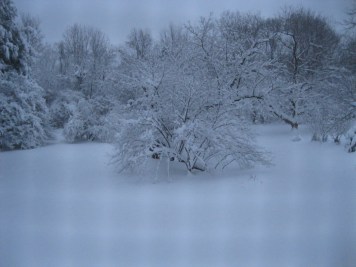
 Winter descends. The world outside your window becomes a black and white photograph. Your mood cycles from sad to mad to drunk. You don’t remember feeling good, having a purpose, hoping, so drunk provides the illusion. You wonder why you continue to live.
Your co-teacher tells the class about a psychiatrist who survived the Holocaust who would ask his patients “why haven’t you killed yourself?” Fear of the pain, you would answer. Fear of the pain in crossing over, which your dad had said that he feared, not death itself. Fear of the pain you would leave behind, which would be so much worse and so much more undeserved.
That still does not answer the question, why do you continue to live? You move forward on the energy of angry complaint, the listlessness of depression, the phantasm of intoxication. You aren’t living. You are wasting time.
Frank O’Hara comes to you in the voice of Don Draper.
Now I am quietly waiting for
the catastrophe of my personality
to seem beautiful again,
and interesting, and modern.The country is grey and
brown and white in trees,
snows and skies of laughter
always diminishing, less funny
not just darker, not just grey.It may be the coldest day of
the year, what does he think of
that? I mean, what do I? And if I do,
perhaps I am myself again.
O’Hara mourned the end of a romance, a lost love, but he described his loss in that balance between the specifically personal and achingly universal. In the full version of the poem, “Mayakovsky,” his fluttering heart of anxiety, his instinctual cry for his mother, his wish for one last moment, his begging for words to express this pain because he has no other ways of bleeding it from his body, the feeling of carrying a weight on his chest — these all come with grief. Then that last section, “always diminishing, less funny, not just darker, not just gray,” divorced from himself, awaiting some new sense of his place and the world.
 The Wuthering Mind